 |
Catalog Search Support |
 |
|
|
1734 - 1923 |
|
 Today, in 2011, you have to look pretty hard to find evidence of the industrial past of
the Upper Housatonic Valley. Yet where the upscale second
(and third) homes, private
schools, and artistic and cultural activities that characterize the area now stand
was once a major "smokestack industry" area. Iron and limestone mines, more than 40 blast
furnaces, mountains stripped bare of trees to make charcoal, foundries, and railroad yards took
advantage of the co-location here of the key natural resources needed to make
iron: high grade iron ore, limestone, forests to burn to make charcoal, and water power -- and then to fabricate such
products as railroad wheels with the locally produced iron.
Today, in 2011, you have to look pretty hard to find evidence of the industrial past of
the Upper Housatonic Valley. Yet where the upscale second
(and third) homes, private
schools, and artistic and cultural activities that characterize the area now stand
was once a major "smokestack industry" area. Iron and limestone mines, more than 40 blast
furnaces, mountains stripped bare of trees to make charcoal, foundries, and railroad yards took
advantage of the co-location here of the key natural resources needed to make
iron: high grade iron ore, limestone, forests to burn to make charcoal, and water power -- and then to fabricate such
products as railroad wheels with the locally produced iron.
People who live or vacation here today and enjoy the natural beauty yet yearn for the "good old days" probably should reconsider! For nearly 200 years, this area was a contender for the title of "Smokestack America." Between the continuous charcoal burning process on every mountain to create the charcoal needed for the blast furnaces and foundries, from smoke from the furnaces and foundries themselves, from the forges melting and casting the locally produced iron, and from the fabricating operations, a continuous pall of smoke must have hung over the area much of the time. The noise of industrial processes -- can you imagine what something called a "hammer mill" might sound like? -- was pervasive and continuous. Heavy industry sat cheek-by-jowl with residence and church, and even families like the Barnums and Richardsons, who owned major parts of the heavy industry here, lived within a short stroll of their forges and mills. Even though nature has since reclaimed our green hills and valleys, the Iron Heritage is still here. Increasingly, its national historic importance is being recognized. Our Congress even got around to recognizing this via our Upper Housatonic Valley National Heritage Area. Between the Lakes Group is participating in the process of finding our iron heritage and in making it more readily accessible to more people. The process is underway. For the most part, the loss of history has been more or less arrested, although threats to the portions that remains can be expected to continue and even increase as developers find attractive targets in our area. And there is much work still to be done before we will not only have saved the remaining structures, but also recaptured a complete picture of what life in this industrial area was really like. Below are some links to websites with more information about our area and its industrial past. |
 New to the area? The Upper Housatonic Valley National Heritage Area group has a great map of the historic and cultural sites not only in Connecticut, but also in New York State and Massachusetts -- including those from the historic iron industry.
|

Since the village of Lime Rock was largely a "company town" at the time Trinity was established in 1872-73, it is likely that Trinity was perceived by its founders as a "company church" -- providing a convenient church for the management and welcoming the workers as well.
Many entities -- corporate and otherwise -- made up the iron industry in our area. Trinity Church Lime Rock has the distinction of being the oldest one still remaining in existence in the same corporate form, under the same ownership, in the same building, still functioning, and (probably because the death of the iron industry deprived it of its main source of funds) still essentially unchanged since the turn of the 20th century.
|
| If you have an interest in the historic
iron industry in other parts of the United States, let us recommend
to you another CD-ROM from Between the Lakes Group called
Johnstown: the Great
Flood and Afterward. Johnstown, located in Cambria County, PA, was significant in the history of American iron as the site of the Cambria Iron & Steel Company. Like Connecticut's Northwest Corner, the Johnstown locale contained the essential ingredients to make iron (and later, steel): iron ore, limestone, coal, and water power (although the water power became at best a mixed blessing if not an outright tragedy in Johnstown.)
We also recommend a chapter on the economic geology and the history of iron, coal, and coke in Fayette County, PA that we publish as a download. |
 Circa 1898, John Rodemeyer, Jr., formerly editor of the local newspaper, wrote what was then -- and remains today -- the definitive history of North Canaan, CT. Containing maps and abundant photographs in its eighty-odd pages, it was both a history of the township and a history of the iron industry that represented its most important industry, including the families that started it. It also includes an often neglected aspect of the iron business that was particularly important (and still is) in Canaan: the limestone business. (You can have no real appreciation of why the school teams of North Canaan Elementary School are called "the Miners" until you understand the importance the limestone business has historically held in North Canaan -- and continues to hold today.) Scrap Book of North Canaan can be classified as a rare book today. We have obtained a copy, scanned it, and added a full index, as well as some ephemera. The index is available on this website for your use.
|

How much land speculation really occurred in colonial times in Salisbury, CT? The popular tradition had been that land speculation was positively rampant -- almost a "favorite indoor sport" of the time. In those days, of course, the Ore Hill mine was still a hill (today, it's a lake), and the stage was being set for Salisbury's later importance in the history of Iron in America. At some time in the future we anticipate publishing a previously unpublished Masters essay written in 1991 that examines Salisbury's early land records in detail and subjects them to rigorous analysis. Unlike most popular history, this one is filled not with theories, generalizations, and puffery about local ancestors, but instead with databases and spreadsheets. In the process, it raises significant questions about land speculation in Salisbury around the time of the birth of the historic iron industry. How much land speculation really DID happen? This article answers that question with finality. We expect to make it available shortly, but publication is currently delayed due to the author's health and her desire to amplify some of the conclusions drawn. Check back here for details. We anticipate offering it as a download. |

You may find some of the photos on our Canaan page of interest.
Please
|
| Railroads have historically followed the iron industry
wherever it has developed. The Housatonic Valley was no
exception. By December 1842, the Housatonic had been completed from
Bridgeport in the south to the Massachusetts state line, and was completed
all the way to Pittsfield by 1849. Not surprisingly, there was not
arms-length independence between the iron industry and the Housatonic Railroad,
as William H. Barnum, of the Barnum Richardson Company, and a founder of
Trinity Church, "The Church that Iron Built," was also a
trustee of the Housatonic Railroad and later its president.
|
| The Tri-Corner History Council, which can be contacted c/o the Salisbury Association, 24 Main Street, Salisbury CT 06068, has prepared a new folder entitled "The Iron Industry in Connecticut's Northwest Corner". It includes a short summary of the industry and a map of a Heritage Trail covering the artifacts of the iron industry as they appear today. The folder is available through the Tri-Corner History Council, or through any of the area historical associations, as well as at local inns. |
"Ghost Towns" is the
name of a website we're happy to recommend. They have made a
specialty of just those throughout the US. In our case, of course,
we're not just talking about ghost towns, but about a whole ghost
INDUSTRY! The Ghost Towns website is definitely worth a look.
 to visit it!
 |
|
if you would like to see pictures from the Blackberry River Walk for
2003. On that walk we learned about the historic Iron industry from today's experts,
including descendants of families who actually made the industry happen, in
the actual locations where history (and iron) were made.
SPECTACULAR! See the PICTURES!
In case you think that learning about the historic iron industry is just for academics, retirees and tourists, you might be interested in knowing that Beckley Furnace often hosts groups from area high schools and junior high schools. Pittsfield (MA) High School and Mt. Everett Junior High were two schools that visited Beckley recently and learned about the iron industry first hand. We've got pictures of the learning process. |
|
to visit the history pages from
The Inn at White Hollow Farm.
|
| In October 2004 we
conducted a Heritage Walk of Lime Rock, the headquarters town for Barnum
Richardson Company (among its other distinctions). In response to
several suggestions during and after that walk, we have expanded the
slideshow we prepared at that time that illustrated the sights on the
heritage walk -- along with what was once there -- for people who weren't up to making the
whole walk . We have included much more material as well.
This has become:
another local history CD-ROM from Between the Lakes Group.
|

Here are a few selected Internet links to articles providing more information about the Iron Heritage of the Upper Housatonic valley.
NOTE: The five links immediately above connect to websites
that are not under the control
of Between the Lakes Group. The contents of those sites may change without
notice, and the addresses may change, which can make the sites inaccessible. If you
encounter any difficulties with any of the sites in the "Other Sources of
Information" section, please
|

Below are a few historic images reflecting aspects of the Iron Industry in the Upper Housatonic Valley. Click on any of the images to view larger versions. |
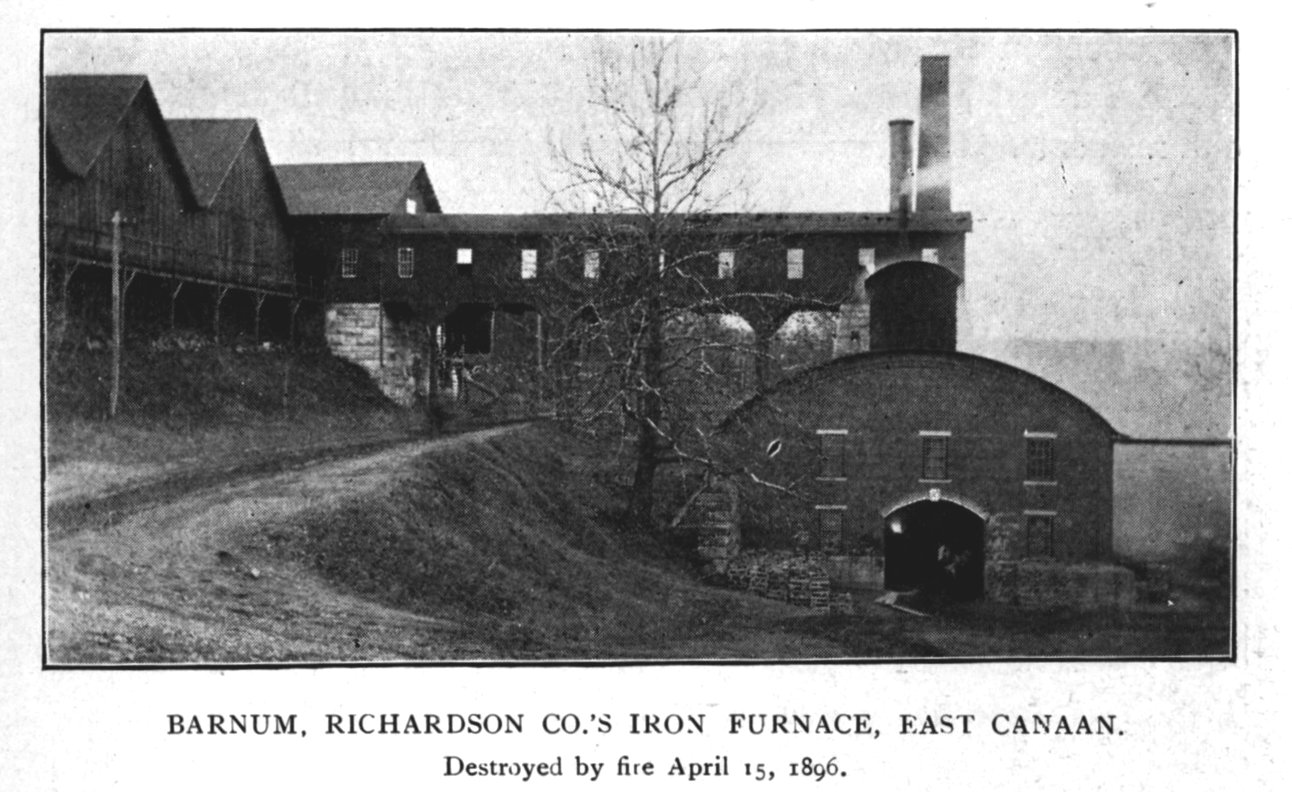
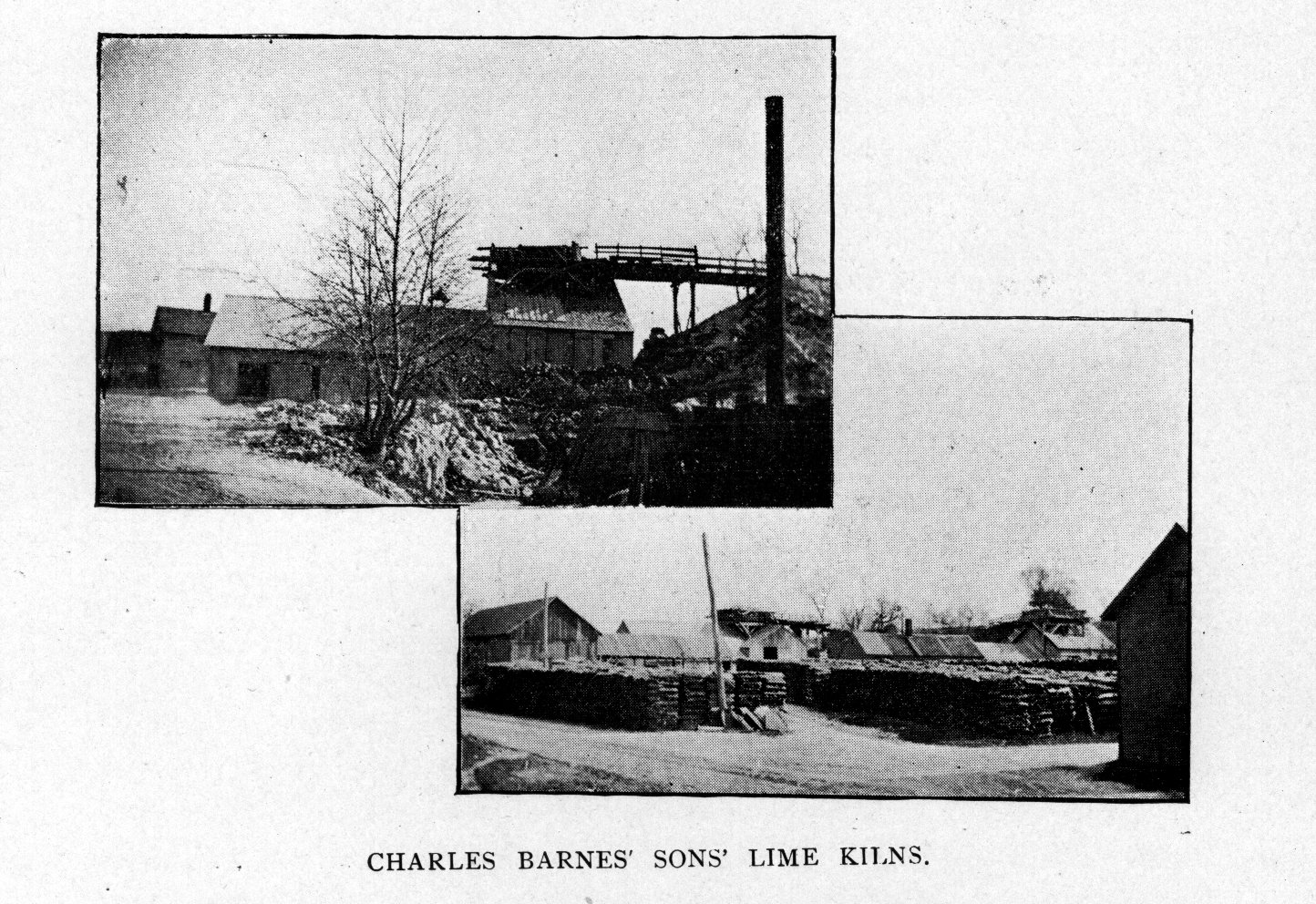
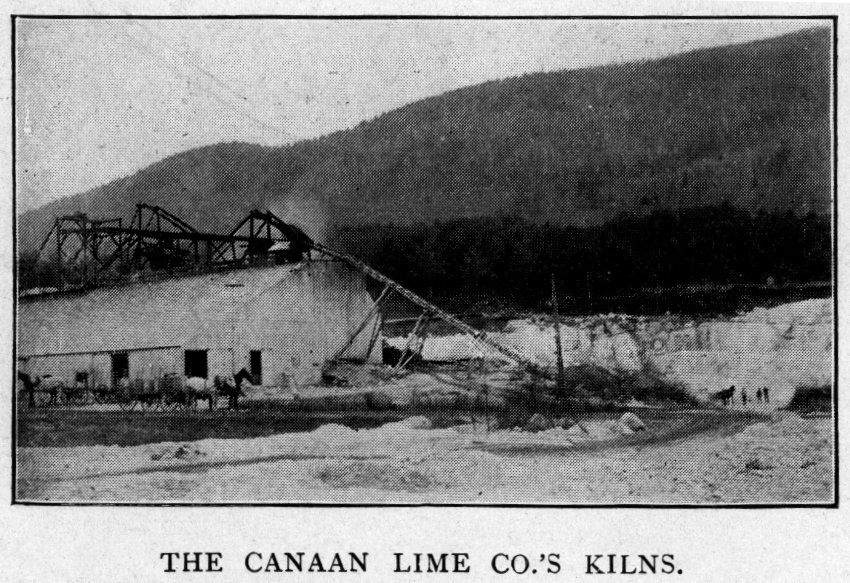
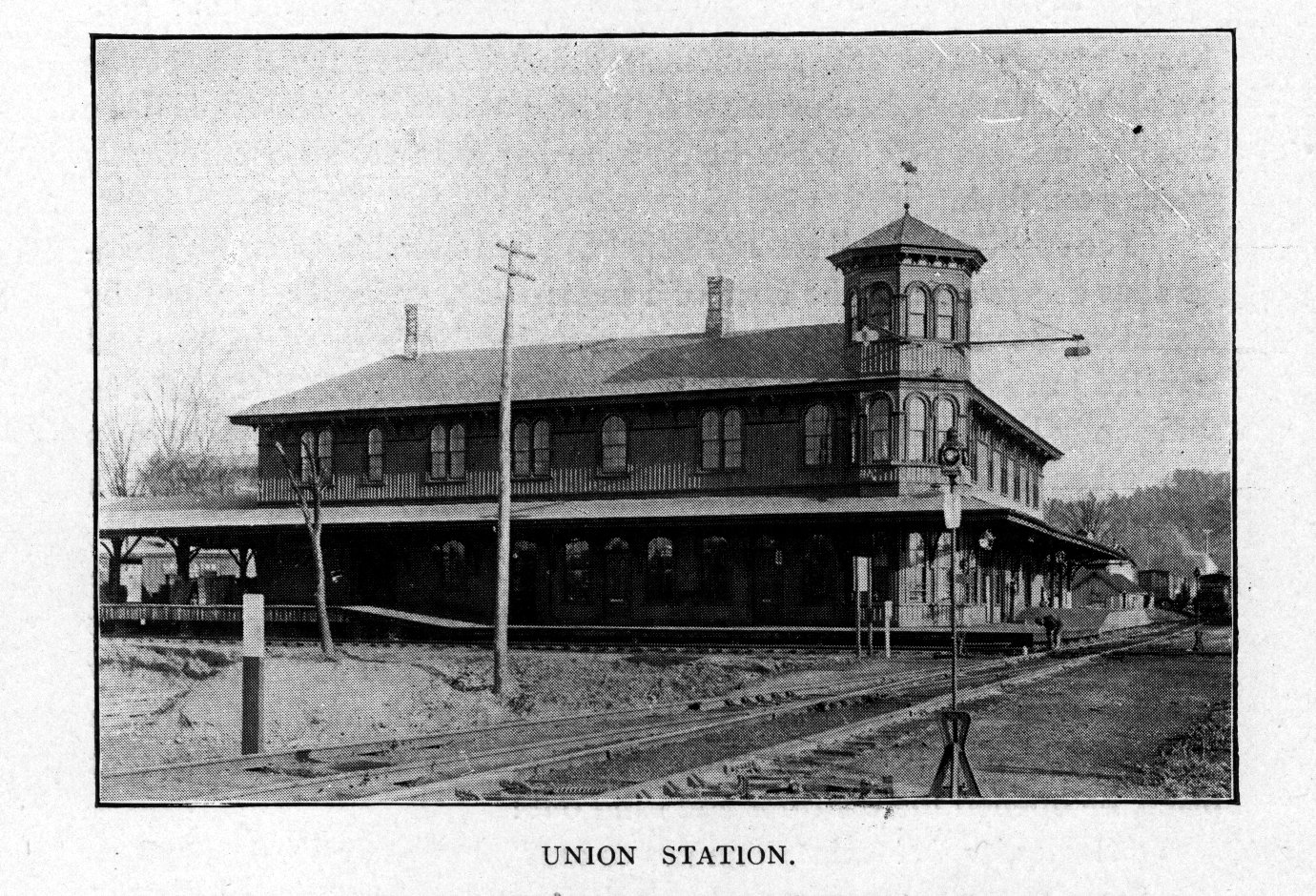
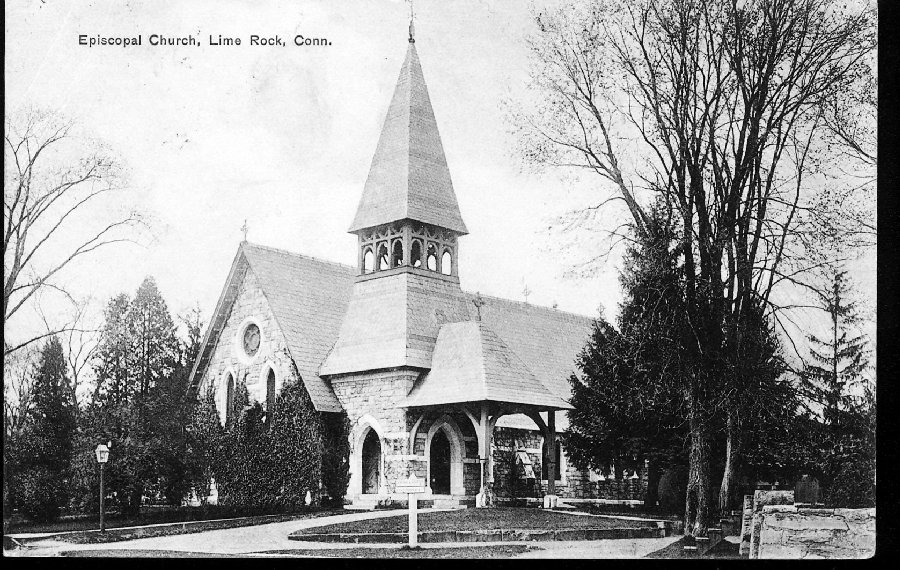
| Sources: #1 - #4: Scrap Book of North Canaan. #5: archives of Trinity Church, Lime Rock, "The Church that Iron Built" For more information about Beckley Furnace, including chronology and maps and many more pictures, see below. For more information and photos from the archives of Trinity Church, Lime Rock, see the link above. |
 :
the historical society for the Towns of Canaan and
North Canaan, does not yet have a web site of their own, so we hare
pleased to provide some of their material here as a public service. Please :
the historical society for the Towns of Canaan and
North Canaan, does not yet have a web site of their own, so we hare
pleased to provide some of their material here as a public service. Please
 to see it.
Included is information about the Society, their current program,
and how to join or support their worthwhile programs.
|

If you want to learn about the iron industry in our area, the Friends of Beckley Furnace will not only help you learn, they will actively involve you in recovering the history of an industry and an entire area! For FOBF, history is very much alive. A view of Beckley Furnace just before it closed is above, as photo #1. Try these links for some information about FOBF, a chronology of the furnaces of East Canaan, historic topographic maps of the area, photographs of the Barnum family (Barnum Richardson Company owned Beckley), and some current photographs of the restoration project, as well as the 2003 Blackberry River Walk photos.
|
|
|
||
|
Find us on Facebook |
|
Between the Lakes Group is located at 372 Between the Lakes Road, in Salisbury, Litchfield County, Connecticut. More specifically, we're in Taconic -- a hamlet in the Twin Lakes area of the Town of Salisbury. Questions about us or about our products? Go to our Frequently Asked Questions page.
|